January 19, 2026
Kit Cabinet is a new series looking at how tools, rigs, and techniques perform when things get difficult. Real-world shoots, tight margins, and no room for error. It’s about the decisions made under pressure, how creative rigging solves problems on the day, and how those choices shape the final film.
This isn’t about showing off gear, it’s about showing what experience, creativity, and know-how can do. Why certain setups work, how small adjustments unlock better shots, and how planning meets instinct when the pressure is on. For clients, that means fewer compromises and stronger results when the conditions are anything but perfect.
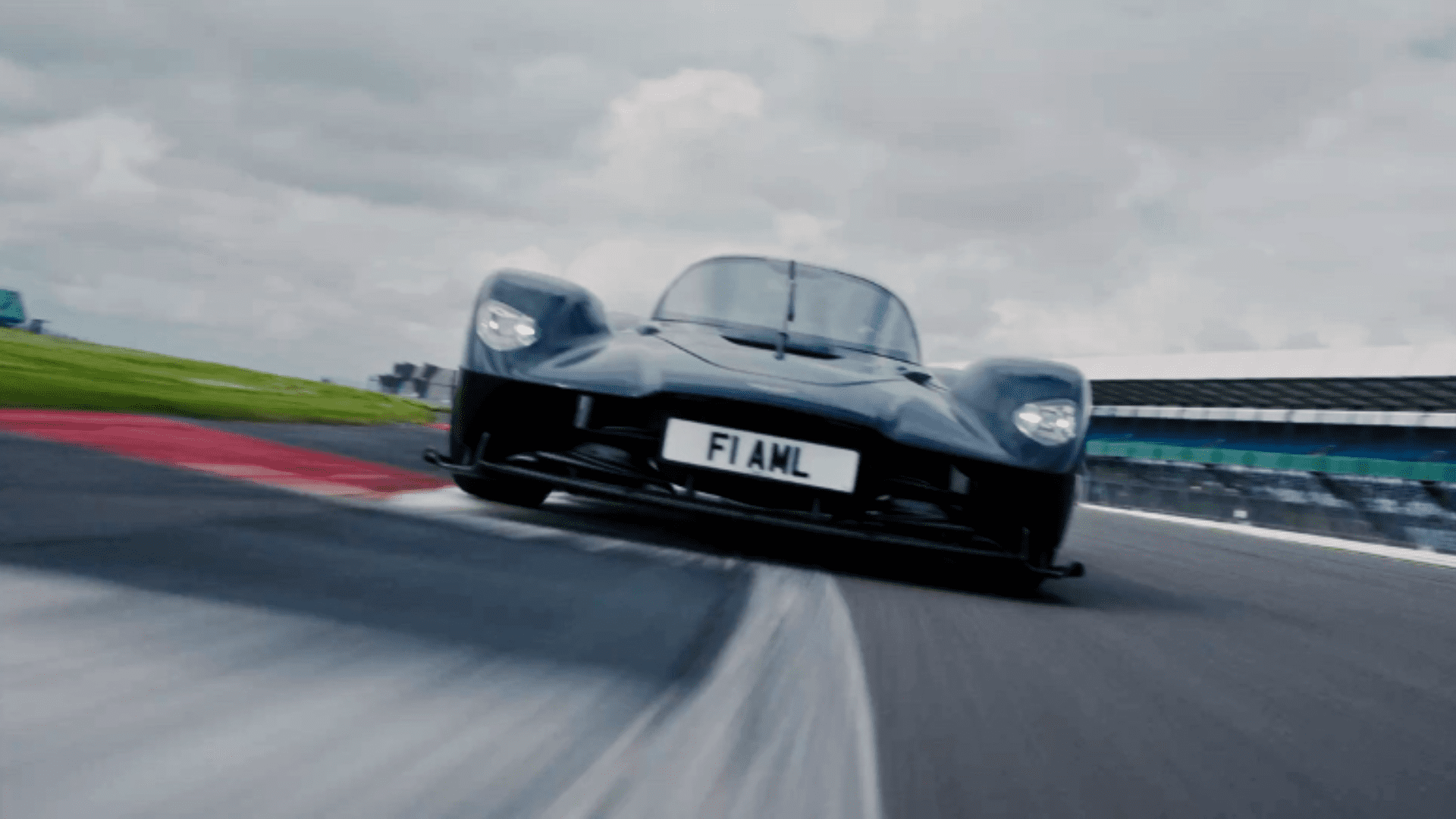
First up: tackling one of the fastest production cars on the planet… the Aston Martin Valkyrie.
When Aston Martin asked us to capture tracking shots of a production car lap record attempt at Silverstone, we knew this would be a challenge. The GP layout is the full Formula 1 circuit: every corner, every straight, designed for the fastest cars in the world. And we needed to film it all, in real time, from a car keeping pace.
Unfortunately, we didn’t have Lewis Hamilton as our tracking car driver. What we did have? Another Valkyrie, a fully tested camera rig, and a team ready to solve the impossible.
Over the course of the shoot, we had to figure out how to mount cameras safely at 200mph, keep shots stable through every corner, and operate the rig while the car was flat out. Here’s how we made it happen, the gear we used, and the tricks we learned along the way.
Here’s a breakdown of just some of the kit we used to capture the Valkyrie at speed:
Each piece of gear was chosen not just for stability and flexibility, but to support high-speed automotive filming, ensuring every angle captured the Valkyrie’s performance perfectly. But gear alone doesn’t solve everything.
There are some critical considerations to keep in mind when attaching a tracking camera to any car, especially a high-performance machine like the Valkyrie. Every choice, from mount type to placement, can make or break the shot. Over the years, we’ve learned a few tricks:
These are small details, but at 180mph, small details make all the difference.
On the first lap, we hit a snag: the Ronin 4D lost focus due to the flex cable setup. A quick restart and unplugging the camera menu solved it, and we were ready for take two.
By the second lap, everything clicked. Our operator stayed composed in the passenger seat, the driver hit every corner perfectly, and the camera captured the action smoothly. Reaching 180mph on the straights, we had proof that the rig, the car, and the team could handle extreme conditions.
Capturing cars at speed isn’t just about following a trajectory – it’s about solving problems creatively. From rigging challenges to airflow, vibration, and safety, every decision impacts the final image.
The Ronin 4D 6K gave us flexibility, precision, and cinematic quality. But it was 25 years of hands-on experience making decisions at speed that allowed us to adapt on the fly and turn a high-risk setup into dynamic, controlled footage. For our clients, that means fewer compromises, stronger creative, and confidence when the pressure is on.
The end result? A tracking film that doesn’t just show a car moving. It shows speed, emotion, and human skill at the heart of the performance.
Whether it’s chasing a record-breaking lap, capturing high-speed sports, or finding the perfect angle for a commercial shoot, we thrive on tackling the tricky, technical, and creative challenges that make every shot stand out. If you’ve got a project that needs bold thinking, clever rigging, or cinematic storytelling, let’s talk.
At Kingdom Creative, we are Made to Move.